Honestly, we haven’t been paying much attention to the action sports media space lately, because there really aren’t any action sports media in the space (yeah, props to Thrasher, always). But, someone sent us a link to Emerald’s Shopping Blog and a story about A360 selling the old TransWorld Media and Surfer Publications titles (along with Men’s Journal) to The Arena Group, the current owners of Sports Illustrated, The Street, and Parade for close to $29 million dollars. The purchase includes the brands Skateboarding, Skateboarder, Snowboarder, Surfer, Powder, and Bike.
“For years, consumers have trusted Men’s Journal for exclusive lifestyle content and guidance on travel, gear, the outdoors, style, food & drink and more,” said Ross Levinsohn, chairman and CEO of The Arena Group. “Additionally, the titles within the Adventure Network have long stood for excellence with passionate enthusiasts within the Ski, Surf, Biking and Skateboarding communities. There are natural synergies between these brands and our existing audiences we can leverage and enhance through integration, distribution and our playbook, driving incremental value, growth and profitability. This strategic investment underscores our commitment to diversifying and devoting resources to opportunities where we see the most value across The Arena Group.”
As we all know, online media sites aren’t exactly killing it these days, but apparently The Arena Group (Where The Action Is™) knows some secret to getting paid. But as one industry insider told us, “Honestly, this seems like more bad media consolidation. Just stacking lots of money-losing things together rarely results in making money. They seem like they’re just building towards an acquisition by Hatchette or Condé Nast or someone bigger.” It doesn’t look like this insider is alone. Arena’s stock dropped 11 percent on today’s news. (Or was it that half percent rate hike.) You be the judge. For the official word from The Arena Group please follow the jump.
The estate of Hawaiian Tropic tanning products founder Ron Rice (who died in May 2022 at age 81) is selling his home on the beach in Ormond Beach, according to a story on Entrepaneur.com. It features 12,414 square feet of 80s splendor on a one acre lot. They’re asking $5.9 million, or about what you’d pay for a two bedroom, one bath home on the beach near us. Here’s how it’s pitched:
Situated on a highly desirable stretch of Ormond Beachside along with other multi-million-dollar residences, the home sits high on the no-drive beach making it your private oasis. Expansive outdoor decking links 3 pools — one of which is both indoor and connected — to the extravagant main house where ocean views abound. In the great room, floor-to-ceiling windows provide unobstructed Atlantic vistas; of the 4 total bedrooms, 2 are opulent direct-oceanfront owners’ suites with their own private views; even the kitchen with its… its wrap-around breakfast bar offers its own vantage of surf and sun.
For a deeper dive into Ron’s personal life, you must click through to all the photos because it really is crazy. That’s all we’re going to say.
The consolidation of California’s smaller ski resorts moved forward today as Invision Capital, owners of Mountain High and Dodge Ridge, announced that they had purchased the Fresno adjacent China Peak from long time owner Tim Cohee.
“As of Friday I have completed the sale of China Peak Mountain Resort to Private Equity firm, Invision Capital, based in Chicago,” said Cohee. “I have agreed to remain General Manager for the foreseeable future. We weren’t anxious sellers but Karl and Invision were very interested in having a resort group that covers most of California’s market geographically.”
We’re big fans of resorts that are not part of the “super mega pass” industrial complex so we’re not sure if this is good news exactly. Bundling smaller resorts into larger bites makes it easier for the big guys to hoover them up, but until then this is a great little group of California resorts to spend some time with. For all the official details please follow the jump.
There was a time when Mason Aguirre was one of the highest paid snowboarders in the world. His smooth-flowing, rock star halfpipe style made him a standout in any terrain. Few snowboarders have had more raw natural talent. And during the first decade of the new millennium it seemed like Mason was everywhere (including placing fourth in the 2006 Torino Olympics).
Then, in what seemed like a minute, he was gone. The Bomb Hole Podcast gets Mason’s entire back story. What he went though and how he made it back. It is a cautionary tale. Thankfully, the same skills that put Mason to the top in snowboarding, helped him get back to sobriety, happiness, and success.
Kanoa Igarashi is Southern California’s favorite local surfer with a Japanese passport so we shouldn’t be surprised to find him moonlighting as the face of Delta Airlines advertising in Nippon. But they’re not using ripping hot surf action of Mr. Igarashi. Nope. They’ve got a photo of him sitting on a plane and grimacing in pain just like every other poor sap suffering through a 12 hour flight from Detroit to Chubu.
As Japan eased travel restrictions in October and leisure travel demand from the Chubu region is expected to increase, Delta kicked off the campaign at the Chubu International Airport, with the support of the airport authority, hanging large-sized banners from the ceiling of the lobby. Delta launched additional OOHs at Kanayama Station and at Meitetsu Nagoya Station.
There he is. Just sitting. Will anyone who doesn’t surf even know who he is?
According to a recently published scholarly article by Brian Glenney and Paul O’Conner skateboarding continues to be “discordant.” In other words, skateboarding continues to be disagreeable and incongruous to the mainstream regardless of how you may feel about its diluted post pop cultural blowout. At least that’s what the authors have decided based on studying skaters in New Zealand. Here’s a little slice from the abstract.
We expand upon skateboarding’s relationship with time using the Marxist theorist Henri Lefebvre’s temporal science of Rhythmanalysis. With the disruption of urban social production of capital by the Covid-19 pandemic, we find skateboarding renewed in urban disjuncture from Capitalism and argue that this separation is central to its performance and culture. We propose that skateboarding is arrhythmic: discordant, out of step, and disruptive of the more predictable rhythms of everyday production of capital.
Good to know. If you find yourself engaged with this kind of super discussion of skateboarding philosophy the please, by all means, click the link to read the entire article.
If we’re going to get advice regarding charging out into the backcountry and riding the big walls, we’d probably put Jeremy Jones at the top of our ask list. And now, thanks to his new book The Art of Shralpinism, we won’t need to waste any of Mr. Jones’ time with our dumb questions, because he’s put it all down on paper.
Here’s how the book is described:
Shralpinism is a compendium of lessons hard won: quick tips, sound advice, and impactful stories. Learn which aspects of avalanche training are most crucial to absorb, ways to anticipate slope behavior or recognize clean lines, how to cut a cornice or develop safety protocols, how to build a fitness routine, the art of the turn, and keys to developing terrain and skills progression. Jones discusses the importance of mentors, the necessity and intensity of practice, the nature of risk, and the shape of failure.
Looks like a pretty good overview of some of the things we all need to know. The 288-page book is currently available on Amazon.com for $29. For all the official details, please follow the jump.
After decades of spending money on their action sporting franchise, ESPN has finally found an exit to the X Games by selling “a majority interest” in the brand to a private equity firm called MSP Sports Capital (owners of McLaren Racing and more.)
“We are bringing our deep-rooted sports expertise to continue the progression and excitement around athletes, competition, fans, and X Games partners,” said Jahm Najafi, Founder and Chairman, MSP Sports Capital, and Founder and CEO, The Najafi Companies.
MSP founder Jahm Najafi, a billionaire who (aside from owning a large piece of the Phoenix Suns basketball team and entertainment company STX Entertainment,) also has investment dealings through Najafi Companies with Shaun Neff. Remember his first brand Neff Headwear?
We’ve never understood the calculus behind PE/VCs interest in action sports. Rarely have the numbers worked for anyone (Jamie Salter is an obvious exception), yet the “sexiness” of boardsports seems to keep the money managers flocking like vultures. They’ve enlisted Tony Hawk as “a brand steward,” and that’s not a bad first move. But the only real synergy the X Games brand ever had was ESPN’s somewhat aging TV/Internet distribution system, so it will be interesting to see what MSP does with the brand outside of that. Najafi is obviously a business genius, so this should be good.
For the official word from MSP, please follow the jump.
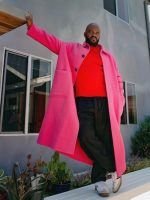
Selema Masekela talks fashion with W Magazine and more specifically about his Alekesam brand.
As a young person, I aspired to get into the surf, snowboard, and skateboard industry. Being a pro athlete in this space would have been the ultimate, but I started too late and didn’t have the skill set, so I thought, How do I stay close to this? I was always curious about what a brand would look like in the surfing space that was specifically African.
Apparently, Alekesam will show us all exactly what that looks like. For the rest of the interview, click the link.
Nothing makes us feel older than a 30 year retrospective of pretty much anything. In this case it’s Ride Snowboards. For their new docco Rough Around The Edges they put a who’s who list of OG shreds from the 90s into a Corbusier and let them run. Every single somebody from the era is represented. Can’t wait to see the entire thing.
 Honestly, we haven’t been paying much attention to the action sports media space lately, because there really aren’t any action sports media in the space (yeah, props to Thrasher, always). But, someone sent us a link to Emerald’s Shopping Blog and a story about A360 selling the old TransWorld Media and Surfer Publications titles (along with Men’s Journal) to The Arena Group, the current owners of Sports Illustrated, The Street, and Parade for close to $29 million dollars. The purchase includes the brands Skateboarding, Skateboarder, Snowboarder, Surfer, Powder, and Bike.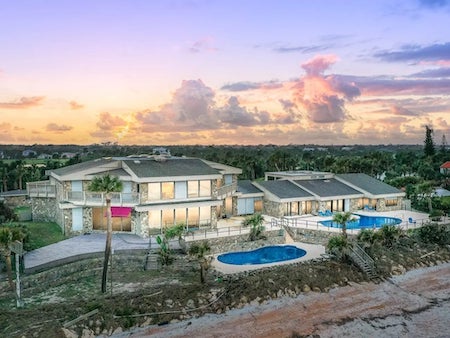
 The consolidation of California’s smaller ski resorts moved forward today as Invision Capital, owners of Mountain High and Dodge Ridge, announced that they had purchased the Fresno adjacent China Peak from long time owner Tim Cohee.
 According to a recently published
  If we’re going to get advice regarding charging out into the backcountry and riding the big walls, we’d probably put Jeremy Jones at the top of our ask list. And now, thanks to his new book
  After decades of spending money on their action sporting franchise, ESPN has finally found an exit to the
  Selema Masekela talks fashion with


