After accidentally catching a thresher shark by the tail and having it drown while trying to bring it in to unhook it, two men in New Zealand decided to tow the shark back out to sea. On the way out one of guys decided to surf the shark while it was being towed behind the boat the other shot video and posted it on Facebook, according to a story in the Otago Daily Times. That’s when everyone got upset.
Mark Collins said he regretted his decision to make a video of his friend Eddie Bithell surfing on a dead thresher shark in the Western Bay of Plenty but said the story had been misrepresented. . . Mr Wright said they had taken the dead shark to shore and left it overnight before taking to back out to sea the next day. . . “The shark had been dead for around 30 hours. It was on a separate trip, we were taking the shark back out to feed it into the food chain,” he said.
Unfortunately, the video has been removed so none of us will ever get the chance to see it.
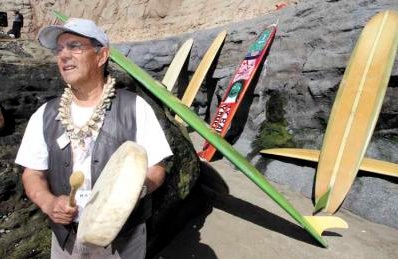
Santa Cruz, California became the fourth surfing reserve in the world in February 2011, but on April 28, 2012 the city’s Parks Department held a celebration of the reserve, according to a story in the Mercury News.
The title was bestowed upon the small town of Santa Cruz, whose cultural identity is largely wrapped around surfing, by the nonprofit Save the Waves Coalition. . . “It’s not only about protecting these good waves,” said five-time Mavericks surfer Ryan Seelbach, who is also a board member of Save the Waves. “It’s more about galvanizing the community to respect the area, ensure beach access and say ‘no’ to development.”
The surfing reserve extends seven miles along the Santa Cruz coast from Natural Bridges State beach to Opal Cliffs. Nice.
Laurie Towner and Dylan Longbottom charged Teahupoo on the historic swell of August 27, 2011. Thanks to Network_A, Billabong’s entire Code Red (documenting the boys crazy day) is now online in it’s entirely.
The Billabong Pro Tahiti event on surfing’s World Tour was placed on hold due to a massive swell bearing down on the famed big-wave spot, Teahupoo. With forecasts calling for unprecedented surf, some of the greatest surfers in the world descended on the island to be in the water, despite a “Code Red” called by the Tahitian Coast Guard, which sought to keep everyone on shore.
We’ve watched all the footage we can from that day and it never seems to get old. How’s that spit?
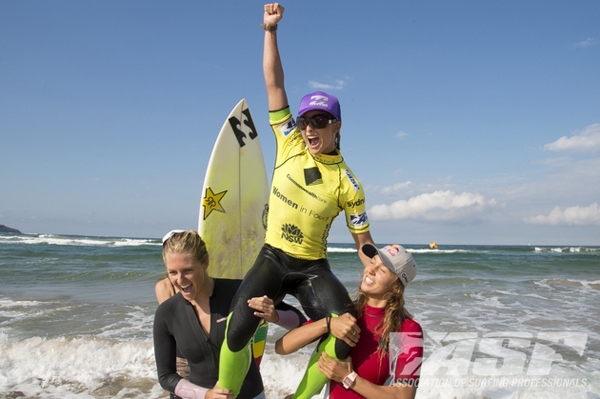
Yes, it’s sad that there aren’t bigger crowds at women’s surfing events, but it is nice that women’s ASP top two will stick around to chair an even winner up the beach. That’s what Stephanie Gilmore and Sally Fitzgibbons did for California’s Courtney Conlogue after she prevailed over Hawaii’s Malia Manuel in the finals of the 2012 Commonwealth Bank Beachley Classic at Dee Why on Saturday.
“I’m speechless right now!” Conlogue said. “It’s been two years on the ASP Women’s World Championship Tour where I kept losing in the Quarterfinals. Then today after winning my Quarterfinal I just tried to go and win the thing. Malia (Manuel) was surfing great in the Final, even though the waves were tricky. I’m really stoked to have won this event! I love Steph (Gilmore) and Sally (Fitzgibbons) and to have them chair me up the beach was absolutely amazing!”
A 28-year-old surfer was bitten on the hand while surfing last night (Thursday, April 19, 2012) in Melbourne Beach, Florida, according to a story on Florida Today.
He was paddling out when he felt something grab his left hand. He looked into the water and saw a shark of unknown species that he estimated to be five feet long. Reflexively, he pulled his hand back. . . The man attempted to drive himself to the hospital, but pulled into the Wendy’s parking lot near the intersection of Fifth Avenue and Miramar Avenue and called 911.
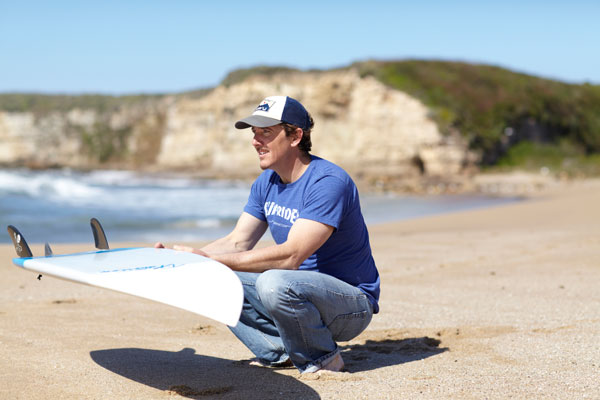
Sustainable Surf’sMichael Stewart and Kevin Whilden get profiled in Forbes Magazine for their work is attempting to green up the toxic surf industry.
The San Francisco social entrepreneurs aim to create an industry certification standard for environmentally friendly surfboards to give surfers, from pros to weekend wave warriors, a scientifically sound green choice. Surfboards are just a $150 million business in the U.S., but for Stewart and his San Clemente-based cofounder, Kevin Whilden, the iconic symbol of the sport is a Trojan horse to make the $7 billion surf industry and the lifestyles of millions of surfers more sustainable. “If we can green up the surfboard then we can green up surfers,” says Stewart, 42, a lifelong surfer who has spent his recent career evaluating the carbon footprint of everything from Motorola cellphones to Volkswagens.
South African professional bodyboarder David Lilienfeld, 20, died while riding waves with his brother and some friends at Caves (Near Kogel Bay) after getting hit by a reportedly four to five meter Great White shark, according to a story on News24.com.
Lillienfield was brought ashore by bystanders and friends, but was confirmed dead at the scene by rescue personnel. . . Following the incident, witnesses claim that up to 6 sharks could be seen in the area.
Our thoughts are with Lilienfeld’s family and friends.