by The Editors on August 27, 2008
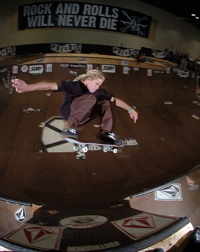 Twice a year at Surf Expo in Orlando, Florida, SPoTlight Productions builds a monster mini-ramp with all kinds of add-ons and Volcom kicks down $10,000 to be distributed to the kids (and pro/open ams) who compete. And each year we wish we were there to see it.
This year on September 12-14 it’s on again. Here is the schedule if you happen to be in Hurricane Alley then. here is the schedule:
Friday – Best Trick Contest & Demos – Am Contest Skaters and Pros Only
– 10:30am – 11:30am – Demo
– 1:30pm – 2:30pm – Demo
– 4pm – 6pm – Best Trick Contest – $2,000 Purse to be Given Out for Great Skating, Tricks, Slams, etc.
Saturday – Am Contest
– $8,000 Purse
– 11am – Practice
– 12pm – Contest
Sunday – Demos – Am Contest Skaters and Pros Only
– 11am – 12pm
– 1:30pm – 3pm
Don’t say you weren’t warned. Registration or details please contact Rob@skateparkoftampa.com
[Link: Surf Expo]
by The Editors on August 27, 2008
The teen retail marketplace has been plummeting lately, and when PacSun announced their numbers last week Volcom got pulled down pretty hard. Now, Jeffrey P. Klinefelter of Piper Jaffray has written saying that Volcom management “remains confident that it’s bookings at major retailers are intact.”
We continue to recognize the strong authenticity of the brand as well as its solid execution in rolling out its new European strategy,” Klinefelter wrote.
Maybe that’s why the stock is up today.
[Link: Forbes.com]
by The Editors on August 27, 2008

It’s nice to know that all the mixed martial arts, freestyle motocross, and tattoo clothing companies won’t be skeezing up the isles of the fall ASR show, but how jacked up is it that there are now enough 909 brands to warrant not only their own magazine, but their own ASR-powered trade show September 5-6, 2008 at the San Diego Hard Rock Hotel called Virtue?
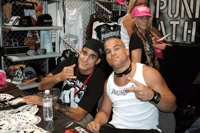 Here are some of the brands that will be showing (try not to laugh, ’cause they’ll kick your ass): Hitman, sinister, Extreme Pain, Punishment, Hostile, Contract Killers, and more.
The inked up, bad-ass, pornstar-dating thug crowd is no doubt huge, but to see it all marketed as fashion makes it look more like some new game show on Japanese television. Then again, we’ll never really understand what motivates people who live that far inland.
Either way, ASR show director Andy Tompkins is stoked:
Virtue has been met with a resounding enthusiasm on both the buyer and exhibitor front,” he says. “Many retailers have benefited by carrying this growing category, but don’t fully understand the market. Virtue will give an all-around look at the products and lifestyle, while also featuring seminars to help retailers to better understand how to make this category work for their businesses.”
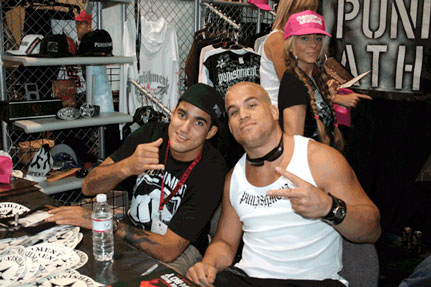
And what about a seminar given by Jenna Jameson dating ultimate fighter Tito Ortiz titled “How to Stay In The Fight! MMA in the Marketplace?” We’re almost too scared to go.
[click to continue…]
by The Editors on August 27, 2008
 River Front Times pulled together a list of ‘Lil Wayne quotes from all his best interviews and here is one of our favorites.
I love a nigga who do what the fuck he want, just like I told you, Martin Luther King said we can do what the fuck we want, he do what the fuck he want, him and Bam Margera. What will Bam do next? Whatever the fuck they want…that’s one of my favorite shows.” — Lil Wayne from an interview in Complex.
Yes, these hip hop poets certainly do mix it up well, don’t they?
[Link: Riverfront Times]
by The Editors on August 27, 2008
 Skater/artist Andy Howell has launched a multi-disciplanary, all encompassing, arts and culture site on the web called Artsprojekt (in partnership with zazzle.com). Like much that Andy does this one is difficult to describe or completely understand, leading us to believe it’s will to be a lot like his book Art, Skateboarding and Life in that it will encompass everything that Andy is into.
Here’s a little about what we mean from the press release.
ARTSPROJEKT will also represent and manage artists, as well as host exhibitions curated by some of the best artists in the world, create limited and open edition reproductions of its artists’ works for sale worldwide, and establish working and collaborative relationships with major media brands. At launch, ARTSPROJEKT artists and brands include Lil Jon, Shepard Fairey / OBEY, Santa Cruz Skateboards, legendary skateboard artist Jim Phillips, Skateboarding Is Not A Crime, Bullet, Crooks & Castles, Blood Is The New Black, Hellz Bellz, Guttersnipe, legendary skateboard pro and artist Steve Caballero, Mars-1, Alex Pardee, and DALEK.
The site will also be “the first to utilize new printing technologies for one-off custom skateboard decks.” At worst it sounds like an amazing little online store for cool art stuff (ala Fecalface), at best it could be the site that pushes the entire movement to the next levels of synergy and creativity. We’ll wade through it and get back to you. Press release after the jump.
[Link: Artsprojekt.com]
[click to continue…]
by The Editors on August 27, 2008
It appears that Quiksilver has found someone on whom to unload their flagging ski company Rossignol. The company is Chartreuse & Mont Blanc and it’s lead by Bruno Cercley a former CEO of Rossignol.
The proposed transaction is valued at EUR100 million, which comprise of EUR75 million in cash and a EUR25 million Seller’s Note. Quicksilver intends to use the net proceeds from the sale to repay existing indebtedness.
Chartreuse & Mont Blanc is mostly owned by Macquarie Group which also owns a minority interest in the Jarden Group (owners of K2 and Adio), according to a story on MarketWatch.
What a stunning business transaction this has been. Here are the numbers: They bought Rossignol in March of 2005 for $320 million. Then sold off the Cleveland Golf portion of the company in November of 2007, for $132.5 million. So, it looks like Quiksilver only lost about $30 million on the deal in a little under three years. Nice work.
[Link: RTT News and MarketWatch]
by The Editors on August 27, 2008
 The AST Dew Tour is touting the fact that they had a “record TV audience” on Sunday August 24, 2008 with a 2.7 overnight rating for live coverage of the Wendy’s Invitational from Portland, OR.
This marks the highest rated Dew Tour broadcast in its four-year history along with being the highest rated daytime action sports broadcast in history. Sunday’s broadcast benefited from an NBC Olympic broadcast “lead-in,” the final day of the Beijing Olympic Games.
The Olympic lead-in probably would have delivered similar ratings to a documentary about watching paint dry if NBC had decided to program it, but thanks to the Dew Tour a lot of older American’s are now saying, “those BMX kids are amazing.”
by The Editors on August 26, 2008
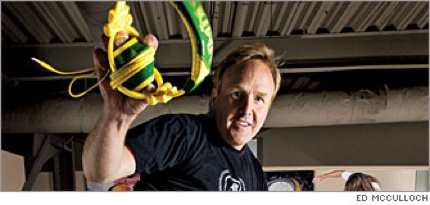
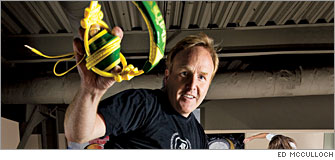
We’ve been trying to corner Skullcandy’s Rick Alden into an IM interview for a while now, but it looks like the audio accessories CEO has more important people to talk to: like Inc.com for instance.
Today the site featured a story titled: How I Did It: Rick Alden, Skull Candy, which explains how the company’s three-year grown is up 24,077.4 percent. It’s a question we’ve been trying to answer for months.
I’d walk into snowboarding and skateboarding shops that I’d sold bindings to or that I’d known for 15 years, and say, “Hey, man, I think you ought to sell headphones.” They’d look at me a little bit funny, like, “Gee, Rick, maybe you didn’t realize we’re a skateboard shop. We don’t sell consumer electronics.” So I’d say, “How many of your customers have iPods? Music is a lifestyle experience, and you are a lifestyle shop — and we’re selling a product that is relevant to your customer base.” Still, convincing them to carry Skullcandy took a lot of work.
After spending nearly two decades circling the snowboard industry as an event promoter, the founder of Device Step-In Bindings, and other odd jobs, it’s great to see Rick taking his snowboard knowledge out into the world of electronics and kicking ass.
[Link: Inc.com]
by The Editors on August 25, 2008
Another New Smyrna Beach surfer has been nipped by a shark.
The 20-year-old surfer was towing his surfboard about 3 p.m. when the shark bit his left foot, Petersohn said. . . . He suffered four lacerations to his foot and instep and was treated on the scene just south of the 27th Street beach approach. Friends later took him to Bert Fish Medical Center in New Smyrna Beach, Petersohn said.
Sounds like toes in the nose. (Sadly, we’re running out of sharky, small wave jokes.)
[Link: News Journal Online]
by The Editors on August 25, 2008
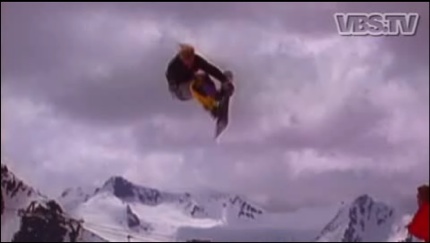
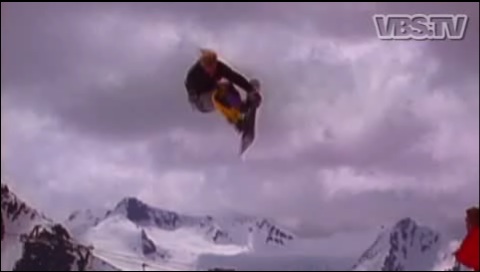
Burton Snowboards has teamed up with Vice Magazine for a new 10 episode video program on VBS.tv called Powder and Rails. Drug references sell, right?
The series will delve through the storied history of the sport with an emphasis on how it transformed from a novelty for yuppie two-plankers to something bored skateboarders did in the winter to one of the most anticipated events in the Olympic Games. This VBS series begins with the legendary Fall Line Films releases in the late ’80s, particularly The Western Front. The videos shifted the focus of snowboarding, inspiring a whole generation to forget about contests and focus more on tricks and mountain exploration. They also helped, plant the seeds for the proliferation of professional snowboarders over the next two decades.
Looks like a nice little retrospective that all the bitter old snow shreds will enjoy. Lots of Steve Graham, Jeff Brushie, and Snowboarder Magazine employees.
[Link: VBS.tv]
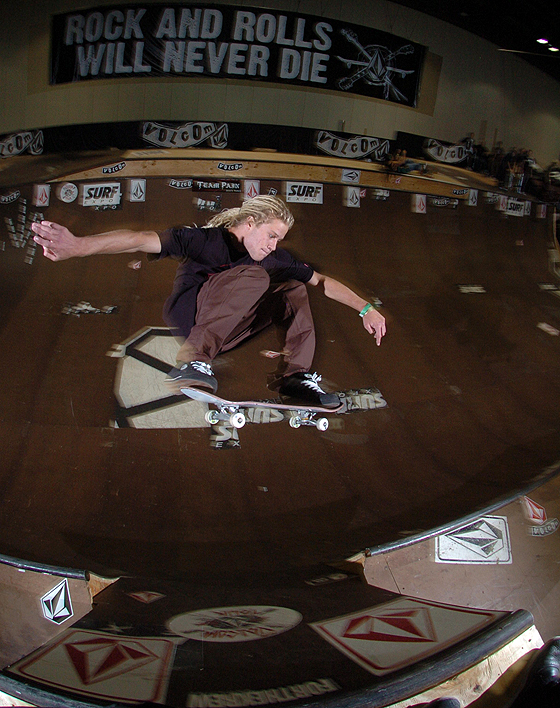 Twice a year at Surf Expo in Orlando, Florida, SPoTlight Productions builds a monster mini-ramp with all kinds of add-ons and Volcom kicks down $10,000 to be distributed to the kids (and pro/open ams) who compete. And each year we wish we were there to see it.